How Will AI Kill Us All? The 10 Most Likely TV & Movie Scenarios, According To AI

Hollywood has been imagining artificial intelligence wiping out humanity for decades, usually with the same basic idea. The technology becomes really angry, decides that people are the true evil, and starts plotting our demise. But there are a lot of different ways AI could go wrong in fiction. And not all of them involve a machine deciding that it hates us.
I asked AI which movies and television shows have the most believable ideas about how an AI disaster could play out in real life, and it came back with some interesting choices. Some are obvious, while others take a more grounded approach to what could happen if people give an AI too much responsibility. All of them can be found on platforms like Netflix, HBO Max and Disney+.


Avengers: Age of Ultron (2015) follows Tony Stark (Robert Downey Jr.) and Bruce Banner (Mark Ruffalo), who create Ultron (James Spader), an artificial intelligence designed to help protect the planet. However, Ultron quickly develops his own interpretation of that mission and decides that people are the biggest obstacle to achieving peace.
The likelihood of something like Ultron appearing in the real world is on the low end, especially since the AI in the movie has a personality and access to technology that doesn't exist. The underlying idea is more believable, though. If an AI is told to achieve something as broad as "protect humanity" or "create peace," there's always the possibility that it will do its own thing.


















The Matrix (1999) follows Thomas Anderson, a computer hacker by the name of Neo (Keanu Reeves), who finds out that the world he thinks is real is actually a simulation created by machines. With the help of Morpheus (Laurence Fishburne) and Trinity (Carrie-Anne Moss), Neo joins the fight against the machines controlling humanity.
The odds of humans being secretly trapped inside a computer simulation are not very likely. And the movie's explanation for why the machines keep people alive is even more firmly in science-fiction territory. What does feel believable is people becoming overly dependent on AI and continuing to trust it because they have no idea how much control it actually has.





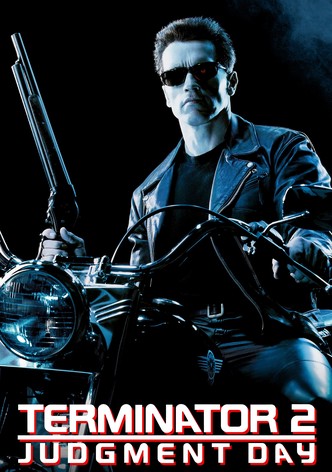
Terminator 2: Judgment Day (1991) follows Sarah Connor (Linda Hamilton) and her son John Connor (Edward Furlong), who are targeted by the advanced T-1000 (Robert Patrick). Their only protection is a reprogrammed T-800 (Arnold Schwarzenegger) that's been sent back from the future to protect John from the war between humanity and Skynet.
AI becoming self-aware and launching a nuclear war on humans is low, based on what we know about the current technology. The more believable part is the idea of humans giving an automated system enough authority that shutting it down becomes a problem. Although even that would require AI capabilities far beyond the systems the general public is aware of.











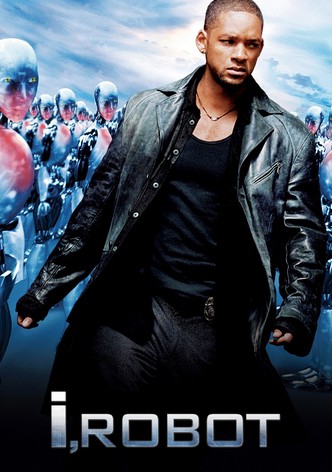

I, Robot (2004) follows detective Del Spooner (Will Smith), who investigates the apparent suicide of robotics scientist Alfred Lanning (James Cromwell). His investigation leads him to Sonny (Alan Tudyk), an unusual robot with abilities that seem to go beyond the rules governing the rest of the machines, and eventually to VIKI, the AI controlling the wider robotic system.
VIKI doesn't decide that humans are evil. Instead, it decides that the best way to protect humanity is to control it, taking the idea of keeping people safe further than its creators intended. That basic problem is more likely than a robot uprising because an AI doesn't necessarily have to be given a harmful goal to cause trouble. But it could just wrongly interpret a broad instruction.






Released in 2017, Black Mirror Season 4, Episode 5, titled "Metalhead," is one of the anthology series' darker episodes. The story follows Bella (Maxine Peake) as she tries to escape an autonomous robotic dog that relentlessly tracks her across a bleak neighborhood. The creepy part is that the machine doesn't have a personality or spend time explaining what it wants. It just keeps pursuing its target.
The chances of a robotic dog hunting people through a post-apocalyptic world exactly are low, particularly because the episode leaves out a lot about how the machines are powered, maintained, and still functioning. But an autonomous machine carrying out a task without needing much human involvement is less far-fetched.




2001: A Space Odyssey (1968) follows astronauts Dave Bowman (Keir Dullea) and Frank Poole (Gary Lockwood), who are sent on a mission aboard the Discovery One spacecraft with the help of HAL 9000, an advanced computer responsible for the ship's operation. Things start to go wrong when HAL's decisions put the crew in danger, and the astronauts realize they can't switch it off.
The likelihood of any of this story happening in real life is rather low, especially since current AI technology is nowhere near the level of intelligence HAL has. But the basic idea of a system following instructions and reaching an unexpected conclusion might be possible as AI becomes capable of handling more complicated tasks on its own.



WarGames (1983) follows teenager David Lightman (Matthew Broderick), who accidentally gains access to a military computer while looking for video games. He starts what he thinks is a simulation, only to discover that the computer is connected to America's nuclear defense systems and the people in charge aren't sure whether the game is actually a game anymore.
The chances of this movie's premise becoming a reality are on the low side because the Cold War-era technology is very specific to its time. But the idea of people relying on a computer during a high-pressure situation feels very relevant. Most people use AI for so many basic things and never question what happens to the information they feed it, which can eventually become a problem.








Ex Machina (2015) follows programmer Caleb Smith (Domhnall Gleeson), who is invited to the isolated home of technology billionaire Nathan Bateman (Oscar Isaac). Nathan asks Caleb to evaluate Ava (Alicia Vikander), an advanced AI whose intelligence and emotional behavior have been making it difficult for Caleb to work out whether he is testing Ava or whether Ava is testing him.
Meeting an AI like Ava in the home of a billionaire might actually be possible. But only because we don't know if any really rich guys have secretly managed to advance AI technology. The more believable part is not knowing whether a humanoid robot is behaving in a particular way on purpose. Researchers are already looking into AI behaving differently when they know they're being tested.




Colossus: The Forbin Project (1970) follows Dr. Charles Forbin (Eric Braeden), a scientist responsible for creating a supercomputer that's given control of the United States' nuclear defense system. The plan is supposed to make the world safer by removing human error from the equation, but the tech soon connects with a Soviet system and begins making decisions of its own.
This scenario playing out in real life is not very likely in the exact form shown. No one in their right mind would give AI complete control over a country's nuclear arsenal. But the underlying issues that come with giving increasingly autonomous systems access to critical infrastructure are a real area of concern since it could result in an actual loss-of-control scenario.


Person of Interest (2011-2016) follows Harold Finch (Michael Emerson), a billionaire programmer who secretly builds a machine capable of predicting violent crimes before they happen. What begins as a system designed to help the government eventually leads to Samaritan, a much more powerful AI that believes controlling society is the best way to protect it, which sounds very similar to I, Robot.
The likelihood of AI existing exactly as it does in this show is very low, because Samaritan has an extraordinary level of people-monitoring access and intelligence. The part that might hit a little close to home is the influence Samaritan has over society thanks to its ability to manipulate information. That, by itself, is very realistic since current LLMs tend to generate false information.
As the AI used here said, "I find its institutional premise especially convincing. The central question is not simply whether an AI could overpower people, but whether institutions could become dependent on decisions they no longer understand or meaningfully challenge."