The 10 Highest Grossing Horror Movies Of All Time

The horror genre has always been a good moneymaker in Hollywood. The genre isn’t all that expensive to produce, and the right mix of atmosphere, scares, and gore has turned small indie projects into global hits. Just look at something like Backrooms (2026), which got its start as a copypasta prompt online and has since become the highest-grossing film A24 has ever produced.
While Backrooms isn’t among the top ten-grossing horror movies ever, it made an impressive showing this year alongside another unexpected hit—which actually did break into the top ten. It’s there alongside some undisputed classics of the genre, major blockbuster reimaginings of older concepts, and some modern revivals (or finales) to popular franchises. Across Hollywood history, these ten horror movies stand out as the most successful hits in the genre’s history, and you can check them out now on Prime Video, JustWatch TV, and more!


One of the most influential and acclaimed horror films of all time, The Exorcist's legacy remains firmly intact fifty years after it debuted—and that extends to its place in the highest-grossing horror movies of all time. William Friedkin's horrifying movie about demonic possession was a game-changer for the genre, bringing a great deal of respect to a style of filmmaking that was too often looked down upon.
It didn't hurt that the film was a major box office phenom, becoming the top-grossing horror movie at its time of release with a global takeaway of $430,872,776. While it would only be two years before another scary film surpassed it in terms of raw box office success, The Exorcist remains arguably the most important entry in the cinematic genre, thanks to the way it pushed horror out of the backroom and into the spotlight.













Tim Burton’s sequel to his iconic horror-comedy Beetlejuice (1988), Beetlejuice Beetlejuice has a blast with its blend of nostalgia pulls, inventive and grim scares. The film revisits Lydia Deetz, decades after the events of the first film, where she finds herself contending with both the return of Beetlejuice to her life as well as a supernatural trap set for her daughter.
Winona Ryder and Jenna Ortega are great in the film, but it’s Michael Keaton who (as expected) steals the show as the titular human exorcist. The long-standing love for Tim Burton, coupled with the modern revitalization that he’s received thanks to the success of Wednesday (2022), helped push the horror comedy to blockbuster status, earning $452,000,435 at the box office—and leaving Warner Bros. likely frustrated when Burton confirmed he’s not planning a sequel.





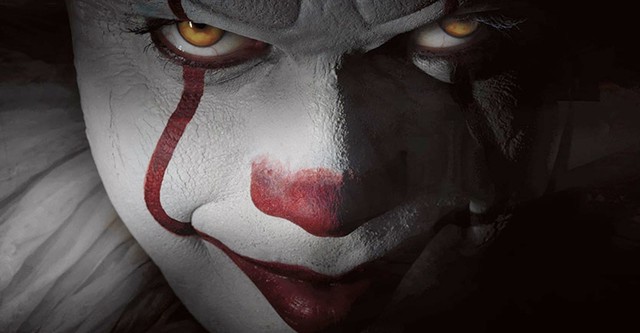
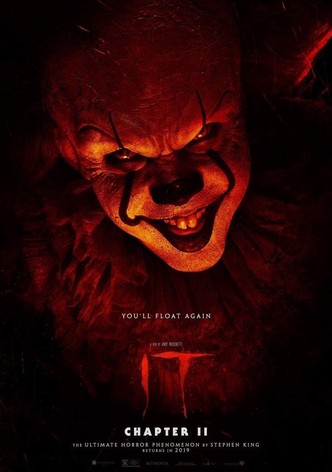

The second part in the modern adaptation of one of Stephen King’s most iconic novels, It: Chapter Two explores the second half of the narrative and does so with a bittersweet gusto that never loses sight of the horror or personality that elevated the first film. The film revisits the Losers Club decades after the events of the first story, with the group forced to reunite after the monstrous entity known as Pennywise resurfaces in their hometown of Derry.
While the film wasn’t able to capture the same lightning-in-a-bottle success of the film that preceded it, Andy Muschietti’s horror sequel does a great job of closing the book on the story—and leaving enough material to revisit in It: Welcome to Derry (2025). The film took $473,123,154 home at the global box office, placing it well below the prior film but still earning a very impressive haul.



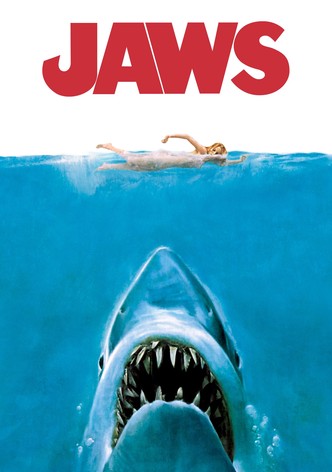
Like The Exorcist, Jaws is one of those films that radically reshaped the film industry around it. Focusing on a small town that tries to contend with a great white shark that terrorizes the beach community at the heart of summer, the film is a perfect example of what makes Spielberg so legendary.
Argued to be among the first true blockbusters as audiences understand the term nowadays, Jaws reshaped the summer movie landscape and turned Steven Spielberg into a household name. The sunlit horror movie earned $495,201,848 at the box office when it debuted in the mid-1970s, leaving audiences terrified for over fifty years—all while spawning a number of sequels and plenty of imitators that tried (and failed) to match the critical and commercial success of Spielberg’s truest horror movie.



The Conjuring series has been a solid hit for Warner Bros. over the years. The Conjuring (2013) is the 20th highest-grossing horror movie ever at the time of writing, with The Conjuring 2 (2016) and The Nun (2018) currently at 19th and 15th, respectively. The highest-grossing entry in the series is also the supposedly final one, The Conjuring: Last Rites.
The film follows Ed and Lorraine as they struggle with the realities of aging—including learning to let their daughter Judy start her own life. It's a fitting finale for the series, one that attracted enough audience attention to earn $499,156,445 at the box office. While there is still room for the franchise to continue, it’s hard to imagine it could ever surpass those heights.


The latest movie to join the top ten highest-grossing horror films of all time, Obsession is a grimly hilarious subversion of rom-com archetypes that connected with modern audiences in a major way. Despite the minor budget and the unknown cast, the story became a massive hit at the box office, earning $442,677,260 globally at the time of writing.
The film's ability to connect with Gen Z audiences seems to have been a key aspect of the success of the film, arguably one of the best ever examples of how effective the horror genre can be as a moneymaker. While it couldn’t surpass some of the other entries on this list, that success means it actually surpassed other modern horror hits like Sinners (2025) to take one of the top ten spots on this list.





Brad Pitt’s star power and the surge in zombie media in the early 2010s—an era dominated by The Walking Dead (2010)—helped make World War Z into a massive phenomenon. Loosely based on the Max Brooks book of the same name, the film depicts the global results of an undead outbreak that quickly overwhelms most of the world—and leaves UN investigator Gerry Lane traveling the world in hopes of finding the source of a cure.
More of a traditional blockbuster than a regular horror movie, World War Z’s massive set-pieces helped propel it to the top of the box office, despite mixed reviews from critics. The movie ended up earning $540,007,876 at the global box office, highlighting how some horror concepts (like zombies) can capture the attention of the world at large.








Similar to World War Z, the star power at the center of I Am Legend definitely played a part in turning the horror movie into a global hit. This time, it’s thanks to the clout of Will Smith, who drives most of the movie’s focus for the first act as seemingly the last person in New York City.
The film follows Smith’s Army virologist Robert Neville, who remains in the ruins of the city seeking a way to contend with the “Darkseekers,” a mutated strain of humans created accidentally during human experiments on cancer cures. The film is far from the first adaptation of Richard Matheson's novel of the same name. While The Last Man on Earth (1964) and The Omega Man (1971) earned comparable reviews and did decently at the box office, I Am Legend was a massive hit that bowed out of theaters with $585,532,684.



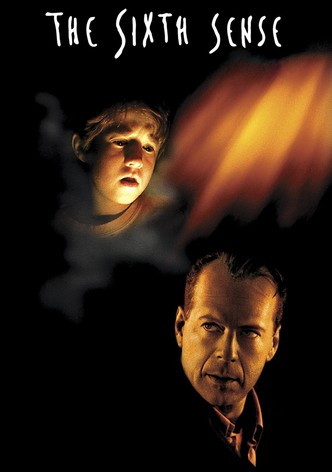
Coming out of nowhere to become a phenomenon and launch M. Night Shyamalan into the cultural zeitgeist as a filmmaker, The Sixth Sense remains one of the highest-earning horror films of all time. More of a creepy drama than a traditional horror movie, The Sixth Sense follows Bruce Willis’ psychiatrist Dr. Malcolm Crowe as he attempts to help a young boy who claims he can see dead people—only for Crowe to gradually realize that the boy isn’t hallucinating.
The film instantly became part of the pop culture lexicon and made Shyamalan a star director. While some of his other films like The Village (2004), Split (2016), and Signs (2002) became hits too, none of them could compare to the staggering success of The Sixth Sense, which went on to make $672,806,292 at the box office.




The highest-grossing horror movie of all time, the massive success of It is the kind of behemoth return that it seems unlikely it will be unseated anytime soon. The first entry in the two-part adaptation of Stephen King’s novel of the same name, It focuses entirely on the Losers Club in their youth when they realize they are among the new targets of the soul-devouring entity known as Pennywise.
Benefiting from the same wave of horror nostalgia that transformed Stranger Things (2016) into a global phenom—and coincidentally sharing a star in Finn Wolfhard—It took home $719,766,009 at the global box office when it left theaters. Along the way, it helped revitalize interest in Stephen King adaptations and set off a new wave of massive horror movies that we’re still enjoying to this day.