All 'Bleach' Movies And TV Shows In Order

Ask any anime fan worth their salt about “The Big Three,” and there’s a good chance that they’ll talk to you at length about whether One Piece (1999), Naruto (2002), or Bleach (2004) is better. These three anime defined an era, spawning franchises that have endured to this day. But while the dominance of One Piece and Naruto is instantly recognizable, Bleach’s success took a lot longer to materialize.
A lot can be said about what stifled the growth and popularity of Bleach, whether it’s the gargantuan amount of filler in the show’s 366-episode run or creator Tite Kubo’s exhaustion from producing the series, but that hasn’t stymied fan excitement. In fact, it’s stronger than ever, with the anime finally concluding this summer with the release of the final season of Bleach: Thousand-Year Blood War (2022), which will apparently add additional content to fix the issues with the manga’s finale. It’s easily one of the most anticipated anime releases of the summer, and if you have a Hulu and Crunchyroll subscription and want to catch up on everything Bleach-related before the series ends, here’s what you need to watch.


It took a while for Bleach to amass that same level of popularity as the other members of the Big Three, but there’s an argument to be made that it has some of the best characters and moments of any anime from its generation.
The story of Ichigo Kurosaki learning that he’s a Soul Reaper opens up plenty of possibilities, and the very well-thought-out lore of the series is immediately apparent in the anime’s first major arc in the Soul Society. The character development all feels logical and meaningful, and when Bleach wants to leave an impact either visually or emotionally, it does so spectacularly. Tite Kubo’s stark artwork is translated wonderfully into the anime, allowing the show’s swordfights to have a level of precision that will surely make oldtaku think back to samurai dramas like Rurouni Kenshin (1996).
It’s not without its flaws, as the show's mountains of filler episodes can break up the pacing of several arcs, but when Bleach is good, it has a style and sense of self all its own.











Spin-Off Movies
Like most major anime of the era, you better believe that there were a handful of feature films made to keep the popularity of the series alive. But unlike franchises like Dragon Ball Z (1996), where the quality of these spin-off films can vary wildly, most of the Bleach movies range from fairly good to fascinating.
The four Bleach films have their own strengths and weaknesses, but they tend to focus on worldbuilding first and spectacle second. The better films tend to focus on relationships or characters that are overlooked in the anime, whether that be Rukia Kuchiki in Bleach: Fade to Black (2008) or Ichigo with his sisters in Bleach: The Hell Verse (2010).
Speaking of The Hell Verse, that movie in particular is a fascinating watch as it explores what Hell is like in the world of Bleach, as it rarely, if ever, gets mentioned either in the anime or the manga. These four movies aren’t essential viewing, but they’re great surprises for fans who expected the bare minimum amount of effort Shueisha usually puts into their feature film adaptations.
Bleach: Memories of Nobody (2006)
Bleach: Fade to Black (2008)
Bleach: Hell Verse (2010)






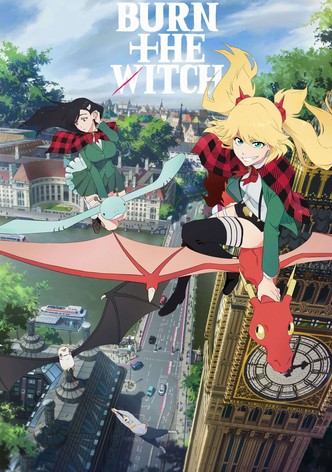
Many people tend to forget that Burn the Witch exists, let alone that it takes place within the same universe as Bleach, but this four-episode series helps to flesh out the world of Bleach and, in a rarity for most Shonen series, takes it out of Japan.
Burn the Witch has a distinctly English vibe to it, focusing on two witches living in London who work for Soul Society but act and behave like typical witches. There’s some action, but it isn’t the focus. It’s mostly setting up what this little corner of the world of Bleach is like, prioritizing mood and atmosphere first and foremost.
Its two leads, Ninny and Noel, are polar opposites, but they work well together and get the job done. The one major criticism is that, much like shows like No Game No Life (2014), while there’s a lot of set-up as to how the world works, there’s not much, if any, resolution. The world of Reverse London is ripe for exploration, and Burn the Witch is a great short series. Tite Kubo needs to return to it and expand upon his ideas of a magic-infused London, because these four episodes demand more.



Bleach: Thousand-Year Blood War (2022)
When Bleach went off the air in 2012, it was because it had caught up to the manga, and instead of constantly playing catch-up to Kubo’s story as he was writing it, Studio Pierrot decided to hold off on adapting the manga’s final arc until it had properly concluded. Those efforts have resulted in four seasons of Bleach: Thousand-Year Blood War, an adaptation that is, by all accounts, better than the source material.
The arc primarily focuses on a war between the Soul Society and their rivals, the exiled Quincies. Plenty of new and returning characters are introduced, each showing off their fantastical abilities with animation that Studio Pierrot took time to perfect.
Each fight looks wonderful, and while there are still some issues with characterizations, mostly with how the Quincies pale when compared to prior antagonists, the scale is truly something to behold, delivering something akin to the final season of My Hero Academia (2016), where our heroes each get the time in the spotlight they deserve. Thousand-Year Blood War was given the time to cook, and Kubo was able to make adjustments that improved his work, making this show the definitive way to experience Bleach’s ending.