The Oldest Version Of 'Animal Farm' Is Still Cinema's Best

George Orwell’s Animal Farm is one of those stories you should read before you die. It’s taught in schools across the country, and thanks to its deceptively juvenile appearance, it makes its themes of totalitarianism all the more haunting. Like most critically acclaimed novels, there are feature film adaptations. Not as many as you may think, though. While the novel was released in 1945, only three films have attempted to tell the story of the rise and fall of Animal Farm as of 2026.
All animals are equal, but all three films attempt to do very different things. With Animal Farm (2026) offering a radically different interpretation of the novel than its two predecessors, which film is the best retelling of Orwell’s novel? If you decide to stream every version, whether it be on Prime Video or for free on JustWatch TV, one version stands well above the others, not only for its faithfulness to the novel, but for how it captures and expands upon the spirit of it.
How The Three ‘Animal Farm’ Movies Differ

If you’ve never read Animal Farm before, it’s a story that appears to be a lighthearted tale about animals running a farm without humans, but it isn’t long before the darkness rears its ugly underbelly. No matter which version of Animal Farm you watch, they hit several of the same beats. We witness the animals rebel against their oppressive owner, and over time, a pig named Napoleon begins to consolidate power for himself. He distorts the laws established at Animal Farm’s outset and turns what should be a utopian society into a dictatorship.
Orwell originally intended for Animal Farm to serve as an allegory for the rise of Joseph Stalin in the Soviet Union. However, it can apply to any totalitarian regime, with many of the events in the novella mirroring real-life dictatorships eerily accurately.
While all three films more or less follow this main idea, they all differ in how they end. In the book, the story concludes with the animals commenting that the pigs are almost indistinguishable from the humans they originally overthrew and leaves the reader on a depressing note that the animals swapped out one dictator for another. In Animal Farm (1954), the pigs are overthrown and brutally murdered. For Animal Farm (1999), we flash forward to see Napoleon’s regime has collapsed in on itself, and no second revolution takes place. Finally, in the most recent 2026 film, Animal Farm is destroyed due to Napoleon’s dealings with a local tech company, but the animals are optimistic that they can rebuild and not repeat the mistakes they made.
Why The 1954 Adaptation Is The Best Version Of ‘Animal Farm’

While each adaptation of Animal Farm has its charms, the 1954 version is unquestionably the best of the three because of how it presents its ideas. It’s the only version of Animal Farm made with hand-drawn animation, which allowed the animals to appear more expressive and lively. The pigs look suitably grotesque, and the downtrodden animals, especially Boxer the horse, are doe-eyed and highly sympathetic.
1954’s Animal Farm doesn’t mince words and makes it blatantly obvious who the good guys are and who the villains are, making it easy for younger viewers to grasp. It still doesn’t make it any less traumatizing, scarring a generation of kids over the course of 72 minutes the same way that Watership Down (1978) does, especially with its violent ending. However, there’s a very good reason why it’s so violent.
While unknown at the time, the film was actually a piece of propaganda orchestrated by the CIA. The film’s directors, John Halas and Joy Batchelor, were unaware of the CIA’s involvement in the film’s production. However, the film was a tool to stoke fears about communism. The ending, where Napoleon and the pigs are killed, sent a message that the only way to defeat communism is through violence. At the time, it was effective, but now the film’s radical ending gives off a pro-revolution vibe where the only way to defeat an oppressive government is to rise against it.
Why Aren’t The Other Versions Of ‘Animal Farm’ As Good?

The 1954 version may not be a perfect recreation of Orwell’s novel, but thanks to its effective animation and mostly thematically accurate interpretation, it became a classroom staple.
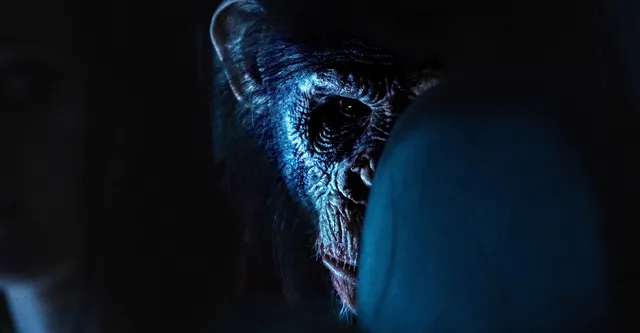
To the 1999 film’s credit, it does have a handful of good points. It’s the only adaptation of Animal Farm filmed in live-action, and it features a mixture of real animals and animatronics made by Jim Henson’s Creature Shop, which are still impressive to watch. It gives the movie a more grounded aesthetic, but sadly, it diminishes a lot of the heavy themes of the novel to make it more approachable for kids. It’s hard not to look at the 1999 version and compare it to light children’s fare like Babe (1995) that prioritize comfort and ignore the story’s tough questions and ideas. Plus, with its ending implying that the best way to end a totalitarian regime is to leave it alone, and it’ll eventually go away, it doesn’t sit right with many of the novel’s themes.
But if fans of Orwell’s novel really want to rage, that’s what the 2026 version is for. It’s Animal Farm by way of The Lorax (2012), where the original story’s themes are ignored in favor of being a movie about evil corporations and corporate greed. By doing so, it dumbs things down significantly for the audience, with plenty of fart jokes and pop culture references that fit better in a mid-2000s DreamWorks movie than a modern adaptation of Animal Farm. It’s a film that thinks modern audiences can’t understand the themes of Orwell’s novel, so it doesn’t even bother presenting them for the film’s 96-minute runtime. If you want the best version of Animal Farm, stick with the 1954 version and ignore the other two.