

Catfishing, Gaslighting and Six Other Words You Didn't Know Came From Movies

You probably don't even realise it, but there are lots of phrases and words you use every day that we can actually thank the medium of cinema for.
From “Hey, I’m walkin’ here!” to “You can’t handle the truth!” to “we’re not in Kansas anymore”, movies have blessed us with plenty of memorable catchphrases over the years — but what about the words and phrases that slip from the silver screen into the lexicon without too many people noticing where they came from?
This phenomenon has recently resulted in a handful of terms that we use on an almost daily basis, yet the origins of which will probably still surprise quite a few people reading this — not least the one that took the best part of a century to catch on. Whether you're already aware of them or not, read on for a little more info on where of each of them began and how they made transition into the way we speak today.
Gaslighting

In 2018, the good people at Collins dictionary put “gaslight” — “the act of manipulating someone by continually providing false information until they question their own sanity” — on its shortlist of words of the year. By 2022, however, the word had become so commonly used in online discourse that Merriam Webster went one better.
Not bad for a term that actually originated 78 years earlier in George Cukor’s Gaslight (itself an adaptation of a 1938 play), a movie about an opera singer (played brilliantly by Ingrid Bergman, who won an Oscar for the performance) whose husband tries to drive her mad — by pretending to be the ghost of her aunt and flirting with the maid (played by Angela Lansbury in her first screen role) — in order to steal her inheritance.
The success of the movie initially made the term popular among psychologists, and it was later adopted by feminist writers in the 1990s, but it wasn’t until the #MeToo movement that millennials really caught on, repurposing it as a catch-term that could be weaponised not only against problematic partners, but politicians and institutions, too. What a journey.
Catfishing

Unlike gaslighting, catfishing leaped in the lexicon of internet chit chat so quickly that it wasn’t initially clear which had come first: the term itself (according to Merriam: “a person who sets up a false personal profile on a social networking site for fraudulent or deceptive purposes”) or the documentary that spawned it.
We are, of course, talking about Henry Joost and Ariel Schulman’s Catfish, a 2010 sensation that spawned a TV show after making everyone a little more wary about who they might be flirting with online. In the movie — which follows Schulman’s brother, Nev, as he develops what appears to be a romantic correspondence with the sister of a young artist who sends him a painting of one of his Facebook photos — the title is inspired by a story told by the girl’s father about how fisherman transport cod with a catfish in the mix to keep them active and fresh.
That metaphor was probably lost somewhere in the etymological process, but it’s an interesting one to think about all the same, as is the documentary itself — which remains a compelling study of early social media naivety.
Bucket List

Has anyone in the last five years thought about the movie The Bucket List? Hard to say, but I’d be curious to see the figures.
Directed by Rob Reiner, it stars Jack Nicholson and Morgan Freeman as two aging men who, on the eve of their 70th birthday (as the actors both were at the time of production), decide to write a list of all the things they’d like to do before kicking the you-know-what. Similar to Catfishing, this idea (described by Merriam as “a list of things that one has not done before but wants to do before dying”) transcended the movie that invented it almost immediately and has remained in popular use ever since.
Unlike their characters in the movie, thankfully, Freeman and Nicholson are still very much with us. Both will turn 90 next year.
Pilled

Whether you consider yourself to be blue pilled, red pilled, or neither, you probably already know that this phrase first originated in The Matrix, a techy, sci-fi masterpiece directed by Lana and Lilly Wachowski that captured moviegoing imagination in 1999 and has yet to let go.
Like a lot of what the Wachowskis were trying to say with The Matrix, the "red pill" originated as an anti-establishment and anti-capitalist idea that they had derived from Alice in Wonderland — repurposing the trippy mushroom sequence from C.S. Lewis’ book into a scene in which Neo (Keanu Reeves) gets to choose whether to learn the truth about the world or to continue on with his cozy but meaningless existence.
Unfortunately, these days the term is mostly associated with terminally online and toxic men, who use it to describe the moment when a new recruit to the manosphere “wakes up” — or in other words, stops believing in things like gender and racial equality. The irony is maddening.
Toast

If you’ve ever in your life used the term "toast" to describe someone or something as “finished or done” you owe Peter Venkman a beer. The Ghostbusters character (famoulsy played by Bill Murray on three separate occasions now) is credited with popularising the word’s usage thanks to a line (“this chick is TOAST”) from the end of the 1984 box-office smash.
The tricky thing about this one is that it’s unclear whether full credit should go to director Ivan Reitman, screenwriters Dan Aykroyd and Harold Ramis, or Murray himself, who famously ad-libbed many of his lines. Either way, it’s one of many awesome things — fire station, logo, song, and so on — that has been immortalised by the movie's success.
Paparazzi

La Dolce Vita is an all-time classic about a reluctant gossip columnist (Marcello Mastroianni) who becomes seduced by the glitzy world (and the glitzy women) of Rome’s upper social echelons — but, might its greatest legacy be Fellini’s off-the-cuff invention of the fittingly parasitic term: paparazzi?
The story goes that when Fellini was writing the movie, he needed a name for an annoying, pestering photographer character, so the legendary Italian director decided to call him Paparazzo — which was, at the time, a colloquial term for a large, buzzing mosquito. Fast forward 66 years and the term is used internationally and, like those pestering insects, won't be going away any time soon.
Spam
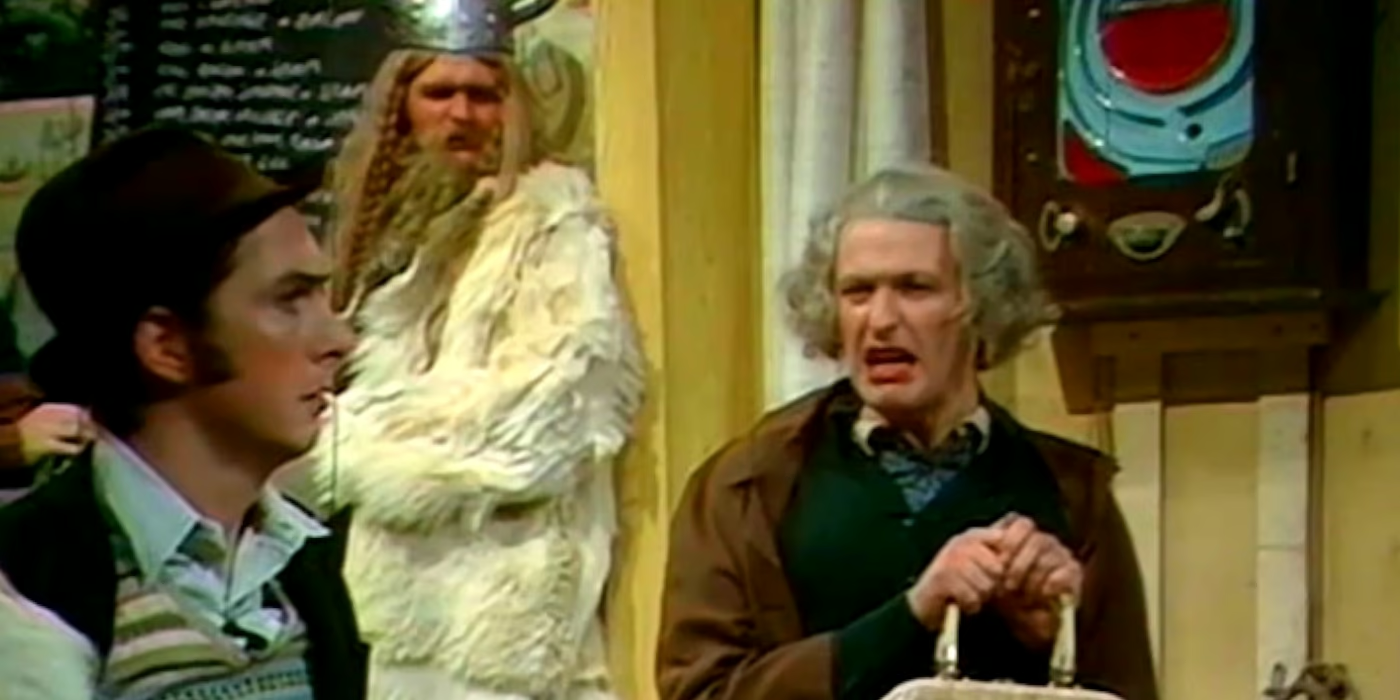
We’ll bend the rules ever so slightly for this one: the term “spam”, of course, referred to a processed meat product long before the Pythons came around to using it in one of their sketches on Flying Circus. We are also bending the rules to include a TV show here, but seeing as the Pythons went on to earn their place in cinema history with The Life of Brian (and others) it feels acceptable.
The sketch is a classic — and typically nonsensical — Python scene in which a group of vikings refuse to engage in regular conversation, choosing instead to chant “spam, spam, spam, wonderful spam.” In the early days of the internet, the sketch became a go-to reference point whenever chatrooms were inundated with advertisements or clearly copy-pasted text, leading to the now ubiquitous term that Merriam describes as “unsolicited usually commercial messages sent to a large number of recipients or posted in a large number of places.”
MILF

We unfortunately have to end our list on a rather un-classy note. Yes, the term "MILF" (which probably appears online more than the rest of the words on this list combined) came from a regular movie. And yes, it is perhaps the most 1999 movie of all time: American Pie.
Thankfully, the acronym is mostly used to describe Jennifer Coolidge (who appears in the movie as Stifler’s mom) — an actress whose stardom, beauty, and iconic genius has long outlived the movie itself.


