

The 8 Longest Movies Ever Made: #1 Takes Over 35 Days To Watch

Albert Einstein once (supposedly) described relativity as sitting on a stove for a minute and it feeling like an hour, and how the reverse is true when speaking to someone you fancy.
The same logic can be used to describe the experience of watching most movies — in that a great 180-minute movie can flash by without the viewer ever checking their watch, while a dreary 90-minute film can feel like a lifetime.
When it comes to the longest movies ever made, however, some of them really do end up lasting tens of hours, multiple days, and even weeks, regardless of how entertaining or not they promise to be. The longest ever made, Erika Magnusson and Daniel Andersson’s Logistics, takes in a pedometer’s journey, in reverse, all the way from a store in Stockholm all the way back to the factory in China where it was made — in other words, 35 days and 17 hours.
Logistics was, of course, only ever exhibited on a gallery wall, much like Douglas Gordan’s 24 Hour Psycho (a movie that plays the Alfred Hitchcock classic at two frames per second as opposed to the usual 24 in order to stretch it out over the course of a day) and Christian Marclay’s The Clock, which edits over 12,000 shots of timepieces from television and film history (everything from Safety Last! to Spider-Man 2) to produce a 24-hour movie that plays to the actual time of wherever it’s exhibited.
For our list of the longest movies ever made, we’ll keep things a little simpler by only including projects that were released in cinemas. I’ve also decided to limit the list to one movie per director and also (with respect to Claude Lanzmann, Wang Bing and Fred Wiseman, among others) to leave out documentaries, as there is no shortage of epically scaled non-fiction movies out there.


Runtime: 5 hours and 55 minutes
After premiering at the Berlin Film Festival in 2020, mere weeks before Covid shut the world down, it felt for a moment as if Ilya Khrzhanovsky’s DAU. movies were going to set the art world ablaze. The project — which involved a living, working Soviet town (populated by 400 characters and 10,000 extras) that the director had overseen the construction of and in which he had filmed multiple features in over the course of a few years — was a Truman Show-style nightmare the likes of which the world had never seen — then allegations about its megalomaniac director began to surface and the work was quickly disregarded.
Degeneration, which followed the town’s inner workings and the wild experiments being carried out there over the course of a few years, was the most ambitious of those movies, both in terms of content as well as its near 6 hour running time. It was also phenomenal.


Runtime: 6 hours and 6 minutes
Coming in seventh place on our list is Marco Tullio Giordana’s The Best of Youth, a far more gentle and nostalgic movie that follows the narrative setup of many of the longest movies ever made — i.e. a decades-long tale that attempts to tell the story of a nation over a period of time by zooming in on the regular lives of some middle class people.
Taking place between 1966 to 2003 in various cities and locations in Italy, Giordana’s movie brushes on everything from the country’s post-War soul-searching to the Sicilian mafia, with the action moving from Turin to Palermo to an art university in Rome. If you have six or so hours to spare and have always dreamed of visiting Italy, The Best of Youth offers quite the panoramic view.


Runtime: 7 hours and 5 minutes
It’s tricky to know where to place Napoléon on this list. Abel Gance’s legendary silent epic on the French military leader has been chopped and changed so many times over the last century that it’s difficult to say which runtime is accurate.
In the early years in France, the movie — which covered the Corsican’s life from cradle to grave — would play for more than nine hours, but when MGM released it in America in 1928, it was cut down to 111 minutes. We have decided to go for the most recent cut (just over seven hours), as it is said to have been based on Gance’s original wishes for the premiere screening at the Apollo theatre in Paris. Feel free to watch whichever version you can get your hands on — or, better yet, whichever version you get the chance to see on a big screen.



Runtime: 7 hours and 19 minutes
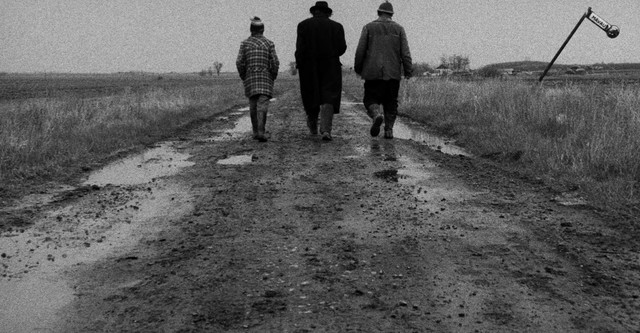
The last widely recognised masterpiece on our list is Sátántangó, the longest of the recently-deceased Hungarian filmmaker Bela Tarr’s nine acclaimed features (the last of which, The Turin Horse, was released in 2011). Based on László Krasznahorkai’s 1985 novel, it tells the story of a small rural town as the locals attempt to come to terms with the fall of communism.
As long watches go, they don’t come a whole lot more austere than Tarr’s sombre, black and white approach to cinema but they don’t come a whole lot more transcendental than this one, either. If you get a chance to catch it in a cinema, just lock in and let it wash over you.






Runtime: 8 hours
In fourth place on our list is The Works and Days, a movie that premiered at the Berlinale Festival in 2020, but one that I can’t claim to have seen. I do know that it takes place in a tiny village in the mountains near Kyoto and follows the life of a farmer over 18 months.
On the Berlinale website, The Works and Days is described as “a portrait, over five seasons, of a family, of a terrain, of a soundscape, and of duration itself.” I guess you can say that last bit for most of these.


Runtime: 10 hours and 24 minutes
If there is one filmmaker in the world renowned for keeping people in their seats, whether they want to be there or not, it is undoubtedly Lav Diaz, a director so synonymous with making long movies (hence our one-per-director rule here) that he’s basically become a meme. He makes movies so long that they leave you with a pain in Diaz, or that you need to use the Lav — that sort of thing.
Having sat the whole way through his 485-minute film Lullaby to the Sorrowful Mystery, I can’t say that I’ve ever felt a huge desire to subject myself to his far longer Evolution of a Filipino Family, which — similar to Sátántangó — follows the lives of a small farming village in the aftermath of an authoritarian ruler, but it is regarded as one of his finest achievements.



Runtime: 12 hours and 55 minutes
Second on our list of the longest ever narrative feature films is a relatively accessible one from the great Jacque Rivette — which slightly cheats its way into consideration given that its near-13 hour running time can easily be sectioned off into 8 parts of relatively similar length.
Rivette had experimented with longer running times with his four-hour epic L’amour Fou two years earlier, but Out 1 — which follows a couple of theatre groups rehearsing two plays, as well as a few street level hustlers, one of whom is played by the French New Wave legend Jean-Pierre Léaud — pushed things to truly epic proportions.


Runtime: 13 hours and 23 minutes
If you’ve ever spent some time at a film festival, you might be aware of the strange things that happen when a really long film is on the schedule. We are talking, of course, about the (mostly male) endurance junkies who will dedicate themselves to watching it from start to finish and never let you hear the end of how great it was.
In 2018 at the Locarno Film Festival, that movie was Mariano Llinás’ La Flor, an Argentine film of elephantine scale that is, at time of writing, the longest narrative feature ever made. The movie is split into six parts, some which begin then end in the middle, some which start in the middle and end at the end, and each of which plays out in a different cinematic genre — B-movie, spy movie etc. As lengthy movies go, its reputation is far more playful than most movies on this list, so credit to Llinás and his Pampero Cine collective for that. Will I ever watch it? Outcome unclear.


