The Multiversal Indie Sci-Fi Critics are Calling the 'New Terminator'

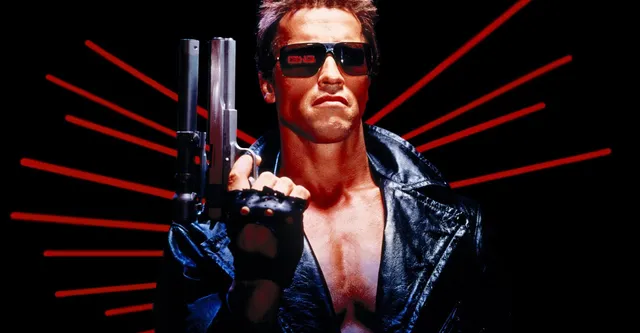
James Cameron’s The Terminator is a near-perfect masterpiece. The story, if you’ve somehow never seen it, follows waitress and student Sarah Connor as she finds herself the target of a killing machine from the future. This terminator’s mission is to assassinate Sarah before she can become pregnant with a child who will one day cause the downfall of the machine overlords of a future apocalypse.
The film is an excellent example of ‘tech noir’ (the fusion of crime and sci-fi), and features some incredible effects from special effects wizard Stan Winston. Cameron’s movie also has a fantastic romance plot between Sarah and the soldier sent back to protect her, Kyle Reese. This fusion of heart and sci-fi action is a tricky one to balance, but Cameron proved it could be done, and it is easy to understand why the film has become so influential.
Since the release of The Terminator in 1984, there have been countless directors and films that have tried to replicate it. But where many have tried, only a few have succeeded. Brothers Kevin and Matthew McManus are the latest directors to nail that Terminator formula, without simply replicating Cameron’s classic. Their new film, Redux Redux, has been hailed by many critics and early audience members as ‘the new Terminator,’ but why are they saying that? How have the McManus’ cracked the secret formula to Cameron-esque low-fi sci-fi without creating a carbon copy? After some careful studying of both movies, here’s everything we know.
What Is Redux Redux About?
Rather than following the time-travel angle of The Terminator, Redux Redux pivots into the multiverse, following the journey of a lone woman, Irene Kelly, who is on a relentless mission: to locate the man who murdered her daughter, and kill him, in every universe. Irene also clings to the hope that in at least one universe, her daughter will be alive, but with so many universes under her belt, she is starting to despair. Then, during a visit to a new universe, she manages to save one of the killer’s victims, Mia. Also desperate for vengeance, Mia pleads with Irene to allow her to help with her mission, leading to complicated and conflicted feelings.
Much like both The Terminator and Terminator 2: Judgment Day, in Redux Redux, the sci-fi slant is merely a lure to hook the viewer in. The story is more grounded and focused on the dynamic and relationship between these two women. Redux Redux posits the question of how far someone would (and should) go for vengeance. Does revenge ever work? Is the ‘eye for an eye’ philosophy healthy or sustainable?
These are complex ideas and emotions, and it is this meaty undercurrent that is set to make Redux Redux one of the longer-standing multiverse stories. The decision to keep the changes between multiverses super subtle is another clever move, eliminating unnecessary fantastical elements and allowing the story and emotive performances to shine.
Why Redux Redux Could be the New Terminator
With its low-fi, grounded take on the science-fiction elements, Redux Redux does for the multiverse movie what The Terminator did for time-travel films. It isn’t simply that its lower-budget sci-fi story has drawn comparisons to Cameron’s work – despite following a different path to The Terminator, Redux Redux has the DNA of the classic film laced throughout.
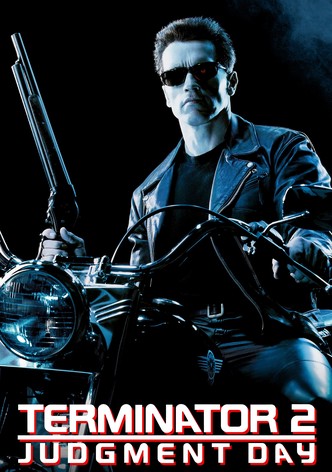
Firstly, the McManus brothers have admitted in interviews that Cameron’s movie is something of a North Star for the duo. The pair grew up on the films of James Cameron, and The Terminator and Terminator 2: Judgment Day were particular favourites. With the director being such an integral part of their movie education, they couldn’t help but splice some overt references and homages into Redux Redux.
This comes most noticeably in some of the character names. All of the police officers in Redux Redux are credited with names such as Officer Cameron, Hurd, Reese and Silberman - references to both characters and creatives from the Terminator films. Another direct nod is in the costuming of Mia and Irene. Mia sports John Connor’s basic jeans and t-shirt combo, and Irene wears a denim jacket akin to the one Sarah Connor wears in T2.
Furthermore, just like both of James Cameron’s Terminator movies, Redux Redux is a road movie. Part of this stems from Irene’s multiverse hopping, but there are also a lot of driving and car sequences, a style heavily featured in the Terminator films. All three films are set in and around Los Angeles, spending time in the desert, leading the aesthetic of Redux Redux to almost subconsciously become linked to Cameron’s classics.
Irene makes an interesting fusion of both The Terminator’s T-800 cyborg killer and the Terminator 2 soldier variant of Sarah Connor. Like Sarah, Irene is driven by her maternal nature, and Michaela McManus is stunning in the part, juggling the gritty and softer sides of Irene to convey a compelling and fully-formed character. Paul Koch’s score is reminiscent of Brad Fiedel’s work; there’s a Polaroid picture that Irene carries around with her, and honestly, there are so many little touches that connect Redux Redux to the 1984 film that this list could go on.
All of these nods, details, and references, both conscious and unconscious, are decoded by the viewer and connected to Cameron’s work. It is hard to fully articulate exactly how the McManuses have managed to capture the spirit of Cameron’s Terminator movies as well as they have. That they have achieved the impossible is not only of great credit to them as filmmakers, but is an exciting prospect for those who love the original Terminator films, but who have been let down by what followed. If you want a film to scratch that Terminator itch, Redux Redux is definitely one to try.
More Movies with Terminator DNA
Redux Redux isn’t the first movie to riff off of The Terminator, and if the McManus Brothers have whetted your appetite for more films with the DNA of Cameron’s classic, here are some suggestions.
With its machines against humanity angle, Gareth Edwards’ The Creator is another great example of a film that follows in Cameron’s footsteps. Set in a world where machines and mankind are at war, an ex-special forces agent is recruited to find and destroy the leader of humanity’s evil AI foe.
Since his debut movie, Monsters, Edwards has demonstrated that he can achieve great results with even a tiny amount of money. The budget for The Creator was far greater than that of Monsters, but at $80 million was still far less than some of its blockbuster companions and still looks far more expensive than most. A far more similar world to The Terminator than Redux Redux, The Creator feels akin to what the future-set Terminator Salvation could have been.
Another great science fiction that is heavily reminiscent of James Cameron’s Terminator films is Rian Johnson’s Looper. The film stars Bruce Willis and Joseph Gordon-Levitt as the same character, Joe. Willis plays the older version, who travels back in time to hunt down the child who will grow up to become a maniacal crime lord known as the Rainmaker. In turn, Gordon-Levitt’s younger version of Joe must kill his older self, and ‘close his loop’. What follows is a cat and mouse tale as both men try to find the child first; older Joe to kill the child, the younger to lie in wait to execute his future self. The plot sounds more complex than it is, but the premise of a killer coming from the future to assassinate someone before they can fulfil their fate is right out of the Cameron playbook.
The dynamic between the potential Rainmaker, Cid, and young Joe has an air of T2’s T-800 and John Connor. Emily Blunt plays an overprotective mother who knows how to handle a weapon, and is incidentally also named Sarah. Despite Looper being set in the future, the sci-fi elements remain fittingly low-fi and tangibly realistic. More T2 than Terminator, Looper is still a must-watch for fans of either film.
Directed by Anthony Scott Burns, Come True is a film that, on the surface, has nothing in common with The Terminator. However, with a little digging, the DNA from Cameron’s film is undeniable. Present more as vibes than explicit story beats, Come True is a film that will speak to fans of The Terminator, though they might not strictly understand why. The plot follows Sarah, a young girl having troubles at home. In need of a safe space to sleep, she signs up for an experimental sleep trial, but gets more than she bargained for when the study spirals out of control. Come True explores the phenomenon of dreams and sleep paralysis, all within neon-soaked lights, low-fi tech, and a pulsating score, provided by Burns’s composer alter-ego, PilotPriest.
Having a lead character called Sarah is an obvious link to The Terminator, but male lead Jeremy has an air of Kyle Reese about him, not limited to his choice of trench coat. At least one sequence involving the pair feels lifted straight out of The Terminator, and Burns even sneaks a poster for the movie in. These elements aside, it is the use of colour, music, and urban industrial nocturnal locations that most closely align it to The Terminator. While vastly different in story, the stylistic connection is indisputable, and truly devout Terminator fans will find themselves siren called to Come True.