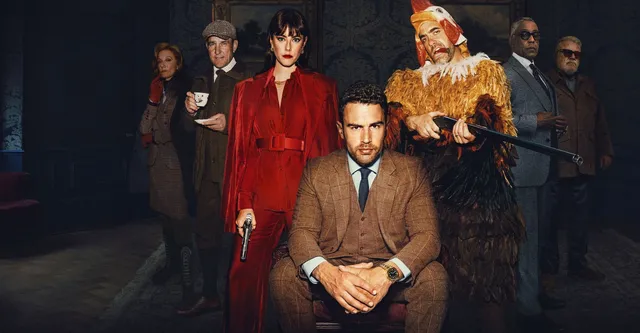
10 Directors That Finished Other Directors' Films

Filmmakers often set out with a very clear vision of the kind of story they want to tell and how they plan to tell it, but things don't always work out.
Last week, it was announced that director and co-writer of The Batman Part II Matt Reeves would be temporarily stepping away from production due to an ongoing family matter. Steven Soderbergh, the Oscar-winning director known for Traffic, Ocean’s Eleven and Black Bag, offered his services to help finish principal photography whilst Reeves is absent.
Fortunately, Matt Reeves has confirmed that he's still tied to the project, but there are many movies that permanently swapped directors at some point during production. With a wide range of reasons behind the scenes, we've dusted off the archives to look at some other examples where this has happened, for better or worse.


Based on Michael Lewis’ book, Moneyball nearly collapsed days before production was due to start, and it took two other Oscar nominees to save it. Originally – and ironically, given the reason for our list – director Steven Soderbergh was set to make the film for Sony in 2009; however, the studio got cold feet about Soderbergh’s approach.
The Traffic helmer wanted to incorporate talking-head-style interviews, detailed statistics and real-life baseball figures in his film, so it was a quasi-documentary-meets-feature, but Sony was looking for something more conventional. Aaron Sorkin and Bennett Miller were brought in to rewrite and reshape the film alongside Steven Zaillian, as was Jonah Hill, alongside Brad Pitt and Philip Seymour Hoffman. It paid off: the film earned six Academy Award nominations in 2011.








Another hugely troubled film, which ended up being two films after production problems, Exorcist: The Beginning was originally set to be directed by John Frankenheimer, with Liam Neeson starring as Father Merrin from the first two films. The filmmaker’s declining health saw him and Neeson depart, replaced by Paul Schrader and Stellan Skarsgård, respectively.
Producer James G. Robinson hated Schrader’s cut of the film and hired Renny Harlin to reshoot scenes to make it scarier. A film that was supposed to cost $35 million ended up costing $90 million, but poor reviews saw the film tank. In the same year, the studio decided to resurrect Schrader’s cut, called Dominion: Prequel to the Exorcist, and gave it a limited release in May 2005. It gained better reviews than Beginning, though neither is remembered too fondly.



Monikered “Kevin’s Gate” after Michael Cimino’s infamous Heaven’s Gate in 1980, Waterworld was a gigantic undertaking, and it was the most expensive film of all time in 1995, costing between $172 million and $235 million to make and distribute, with the water sequences alone costing a fortune and proving exceptionally difficult.
Costner and director Kevin Reynolds had worked together on Robin Hood: Prince of Thieves years earlier and had repaired their friendship in between to make the film together, but they were to fall out again after shooting. Reynolds quit before the film’s release, leaving Costner to finish post-production and control the final edit. But don’t believe the flop status it still gets: it was a decent hit. And it rocks.


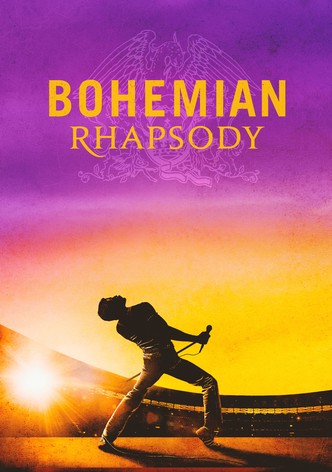
An outlier of a case from many of the films on this list, Bohemian Rhapsody was a film that lost its director for some very different reasons. After multiple attempts to make a biopic of both Queen and Freddie Mercury (Sacha Baron Cohen came close), a film was finally put together by producer Graham King, with Rami Malek as Mercury and controversial director Bryan Singer at the helm.
However, in December 2017, with filming almost complete, Singer, who had already been accused of misconduct over his career, was fired after leaving the set on multiple occasions, as well as clashing with Malek. Dexter Fletcher was brought in to finish the film and oversee post-production, and the film was a box-office phenomenon, with Malek winning an Academy Award for his performance.



It was a sad tragedy that changed the trajectory of 2017’s much-hyped DC Studios’ Justice League team-up film, as director Zack Snyder had to leave the project after his daughter died. With the franchise already in disarray, the studio brought in controversial filmmaker Joss Whedon to recut, rewrite, and reshoot large portions of the film to “lighten” the tone.
What transpired was one of the most disappointing comic-book films of all time, with its much-maligned final product becoming synonymous with Henry Cavill’s moustache – the actor was unable to shave it due to his commitments to Mission: Impossible – Fallout at the time. The opening scene is perhaps the epitome of the entire project, with Cavill’s moustache horrifically CGI’d out.
Four years later, Zack Snyder was finally able to release his own version, after Warner Bros. provided an additional $70 million budget to complete and release Zack Snyder's Justice League on HBO Max.


Easily the craziest film production of all time, The Island of Dr Moreau was filmmaker Richard Stanley’s dream project. However, casting problems, rising costs, remote locations with harsh weather and more came to a head and, just days into production, New Line Cinema fired Stanley, who then proceeded to sneak back onto the set under heavy make-up.
Legendary director John Frankenheimer came on board to finish the film, but never spoke about his experiences, other than to say it was a miserable one, particularly with star Val Kilmer, who was reportedly horrific to work with. Then, there was Marlon Brando: overweight, refusing to learn his lines and wanting a small man to be alongside him at all times. It all created the most manic film set of all time.


For over six decades, Stanley Kubrick’s Spartacus has continued to adorn multiple all-timer lists and is, to this day, still considered one of the great masterpieces of American cinema. However, its road to the screen was not smooth sailing. The film started production with Anthony Mann (El Cid) in the director’s chair before he was fired by star Kirk Douglas, who was also the film’s producer.
That wasn’t the end of the problems, though, as Kubrick and Douglas fought multiple times over the film’s direction, with Kubrick later saying it was the only film of his where he lacked full control. The film was epic, costing $12 million, but ended up grossing $60 million, well over $500 million by today’s standards, and winning four Academy Awards.


The Salkinds, producers of the Superman films, envisioned the biggest film ever made – so ambitious that the story was split in two. Marlon Brando and Gene Hackman signed on, Christopher Reeve was discovered, and the first film, released in 1978, revolutionised cinema and comic-book adaptations. Much of its success was thanks to director Richard Donner, but tensions between him and the Salkinds grew during production.
With both films being shot simultaneously, Warner Bros. intervened, insisting the first movie be completed and released before work continued on the sequel. Despite its enormous success, Donner was eventually fired, with Richard Lester brought in to finish Superman II. Reshoots were required to establish Lester’s own vision, adding further costs and upsetting the cast and crew. Behind the scenes, the bitter dispute marked the beginning of the end for the original Superman franchise.


Perhaps the most high-profile and most recent example of a director being replaced mid-shoot, the production history of the Star Wars spin-off Solo: A Star Wars Story is even more compelling than the film itself. It seems crazy now that, after the success of the Spider-Verse films and Project Hail Mary, filmmakers Phil Lord and Christopher Miller would be fired from anything, but on this occasion, they were.
They spent over four months in production before creative differences with Lucasfilm over the film’s tone and extensive improvisation led to their replacement by Ron Howard. Reshoots, character changes, rising costs, and concerns about Alden Ehrenreich’s performance – one of the film’s positives, ironically – led to the film costing over $275 million to finish and only grossing $393 million worldwide.




Bundle 4k


Heavyweight producer David O. Selznick spent years trying to bring Margaret Mitchell’s novel to the screen, but when he eventually did, it was plagued with all sorts of problems. The script was still being reworked as production began, which then led to director George Cukor being fired after three weeks of work and two years of pre-production.
They brought in Victor Fleming, who was in the midst of making The Wizard of Oz, to finish the film, with a third director – Sam Wood – brought in whilst Fleming recovered from exhaustion. However, Gone With The Wind was a monumental success, winning eight Academy Awards and becoming the biggest film of all time, with $4.56 billion grossed, adjusted for inflation. Fleming would get sole directing credit for the film.