10 Cult Sci-Fi Movies You Can Now Watch for Free in the UK

Who doesn't love to explore strange new worlds, to seek out new life and new civilizations, to boldly go where no man has gone before? Well, you will be happy to hear that JustWatch TV has a plethora of amazing journeys into space and the unknown to watch for absolutely free.
Classics like Terry Gilliam's Brazil, Ed Wood's Plan 9 from Outer Space, and John Carpenter's Dark Star are some you may well want to revisit again, but what about some underseen films that are equally worth watching?
Thanks to JustWatch TV, you can watch these ten brilliantly enjoyable sci-fi films without it costing you a penny.

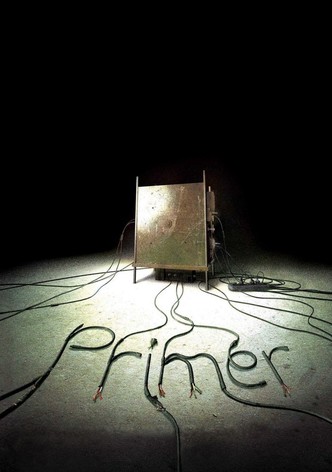


Easily one of the most brilliantly bonkers modern sci-fi films, Primer was one of only two films made by the now-retired filmmaker Shane Carruth. He wrote, produced, directed, scored, edited, and co-starred in the film, which won the Grand Jury Prize at the Sundance Film Festival in 2004 and was made for just $7,000. Its central conceit? Time travel.
Friends Abe (David Sullivan) and Aaron (Carruth) are two engineers who spend their spare time in a garage trying to develop new technology. One day, while working on a way to reduce an object's weight, they discover a method of travelling back in time. However, they soon discover that the consequences outweigh the pleasures. Obtuse, complicated and almost impenetrable, Primer is a truly fascinating film that demands multiple rewatches.








From acclaimed filmmaker Jang Joon-hwan, Save the Green Planet! is a wild and unpredictable sci-fi dramedy that follows a troubled young man who believes that powerful corporate figures and those at the top of society are secretly aliens sent to destroy Earth. Is he crazy, or do his many theories actually make him the smartest man in the room?
If it all sounds familiar, you'd be right, as the film was remade in 2025 by director Yorgos Lanthimos as Bugonia, starring Emma Stone and Jesse Plemons in a similar scenario. A story that explores how those who control society shape the world, it's also a touching, thoughtful film about grief, mental health and the scars of trauma.



The directorial debut of John Carpenter, Dark Star began life as a student film in 1970 before being expanded into a feature film through additional shooting and eventually appearing at the Filmex festival in 1974. It cost $60,000 to make, but its expansive effects and unique atmosphere made it look far more expensive than it was. Such was the distinctive filmmaking of Carpenter and co-writer Dan O'Bannon.
O'Bannon went on to co-write Alien, and you can see the origins of that film in Dark Star. Both explore space travel and the possibility of other life in the universe, although these ideas are treated much more darkly in Ridley Scott's film. This is a comedic sci-fi film about isolation and the folly of technology, while also satirising films such as Stanley Kubrick's 2001: A Space Odyssey.









Based on the manga series, Terra Formars was brought to the screen by award-winning filmmaker Takashi Miike, the director of Audition. Set in the 21st century, the film explores the consequences of overpopulation on Earth and humanity's attempts to colonise Mars as a potential new home. One supposed solution involves scientists send cockroaches to Mars to help transform its environment into one more suitable for human life.
Fast-forward to 2599, and a group of misfits and criminals is sent to Mars to exterminate the cockroaches ahead of humanity's planned colonisation. However, they encounter mutated cockroaches that have grown to human size and possess extraordinary speed and strength. Humanity's mission to prepare Mars for colonisation quickly becomes a fight for survival. Part Alien, part Starship Troopers, it's a gory, wild and thrilling ride that never lets up.




Director and co-writer Darren Aronofsky once described The Fountain as being "very much like a Rubik's Cube, where you can solve it in several different ways, but ultimately there's only one solution at the end." Well, he isn't wrong. Spanning three different time periods, his existential sci-fi film about love, loss, and fate is as epic in its ideas as it is in its production design and world-building. However, it might take a few watches to get to its core.
Hugh Jackman and Rachel Weisz lead the film, portraying characters connected across three different timelines: the 16th century, the present day and the future. Interweaving these stories through match cuts and recurring motifs, Aronofsky's expansive, all-encompassing film is an underrated gem just waiting to be rediscovered.



For many, Brazil represents the culmination of director Terry Gilliam's career, bringing together his abstract, surreal and sometimes impenetrable themes in spectacular fashion. However, he had to fight to get the film released, as Universal wanted a shorter version for the US market that would rip its heart and soul out. Gilliam took the fight to the studio in public and won.
Set in a nightmarish future ruled by an all-powerful bureaucracy that relies on constant surveillance and fear, the film follows lowly government worker Sam (Jonathan Pryce), who dreams of something more. He escapes into daydreams of a brighter world in which he becomes a winged hero who saves a beautiful woman, Jill (Kim Greist). An Orwellian nightmare by way of Monty Python, it's a soaring, intoxicating film about love, freedom and rebellion that is unmistakably Gilliam.


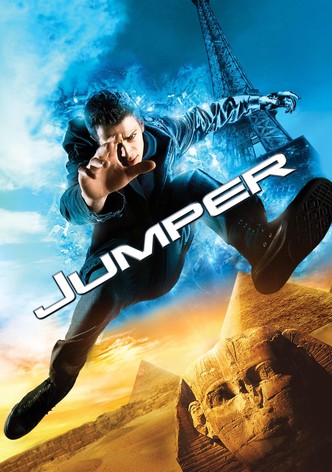
Based on the 1992 novel of the same name by author Steven Gould, Jumper is a sci-fi thriller about people who possess the ability to teleport to any location on Earth. David Rice (Hayden Christensen) is one such person. While he uses his ability to gain financial advantages and escape his troubled upbringing, he soon finds himself hunted by Roland Cox (Samuel L. Jackson), a member of a secret organisation dedicated to tracking down and killing Jumpers.
Director Doug Liman (The Bourne Identity) brings his usual visual style and flair to proceedings, making fantastic use of the many locations featured in the story. However, this is only one part of the film's wider mythology. While exploring themes of freedom, power, family and responsibility, Jumper also sets up a larger world that could have been explored in planned sequels, which ultimately never materialised.


Not quite as well-known as Godzilla, Gamera is a giant prehistoric turtle with two jet engines that help him fly. Yes, you read that right. The star of more than a dozen films since 1965, Gamera received something of a reboot with Gamera: Guardian of the Universe, which retained all the mayhem, carnage, goofiness and charm of the earlier films.
In Japan's Goto Islands, ornithologist Mayumi Nagamine investigates reports of giant birds known as Gyaos terrorising the area. As the creatures wreak havoc, a recently awakened Gamera emerges as humanity's unlikely saviour. Cue massive aerial battles, plasma fireballs and spiritual connections in a Japanese monster movie like no other. It's a truly unique cinematic experience and enormous fun.


One of the most underseen and underrated high-concept sci-fi dramas of recent years, Saul at Night has an intriguing premise. The titular Saul (Kentucker Audley), a loving father and husband, takes part in an experiment in which he is the only person awake between 10pm and 6am, while the rest of society sleeps. During the day, he must sleep while everyone else is awake, effectively shutting him off from the world. Then, on one of his midnight walks, he meets another person who appears to be undergoing the same experience.
An allegory for isolation, loneliness, how we use our time and how we waste it, as well as fatherhood and what it means to be a good partner, Cory Santilli's film is a slow-burning psychological drama that leaves many questions unanswered. Nevertheless, it remains powerful enough to keep you searching for answers.


Flying saucers, resurrected corpses, aliens and government conspiracies all feature in the infamous sci-fi tale that is writer-director Ed Wood's magnum opus Plan 9 from Outer Space. Regarded by many as the worst film ever made, its cult status has only grown in the decades since its release in 1957, making it something of a favourite among sci-fi fans.
Despite having virtually no money to make the film, Wood persevered through countless production difficulties and the derision of much of Hollywood, determined to realise his vision. He even managed to feature horror legend Bela Lugosi, who had filmed material for an earlier, unrealised project before his death. The resulting film helped fuel a greater appreciation of independent filmmaking and so-called 'bad' cinema. It also helped immortalise Wood, whose sincerity and determination shine through despite the many odds stacked against him - Tim Burton's brilliant Ed Wood further helped this.