Sam Raimi's 10 Best Films, Ranked (Including Send Help)

Having played a central role in revitalising the horror genre, with Evil Dead, and the superhero genre, with his Spider-Man trilogy, Sam Raimi can rightly claim to be one of the most influential filmmakers of the last 40 years.
Despite that admirable longevity, he continues to make movies with the same creative verve and youthful energy that once marked him as a director to watch. His 2022 addition to the MCU, Doctor Strange and The Multiverse of Madness, boasted a delightful number of Raimi-coded moments, and his new movie, Send Help, isn’t short on them, either. Like his contemporaries in American cinema (Spike Lee, Tarantino, Gus Van Sant), Raimi appears to have retained a pure excitement for the artform, even after four decades in the business—during which he went variably in and out of fashion in an industry that never seemed to fully know what to do with him.
With Send Help, a desert island black comedy starring Rachel McAdams and Dylan O’Brein, opening wide across UK cinemas, it feels like as good a time as any to round up the director’s ten best—which I’ve arranged below in ascending order. Read on to discover more about the Raimi canon and use the guide below to find them on services like AppleTV, Netflix, Prime Video and elsewhere.


I always got the sense that Raimi landed the job of directing Doctor Strange in the Multiverse of Madness by allowing his versions of the Green Goblin and Doctor Octopus to appear in Spider-Man: No Way Home. Whether or not that’s true, I still think the MCU benefited from having a dash of the director’s idiosyncrasies in the mix, if only for a short time.
This was the period when Marvel Studios began to experiment with other genres (anyone remember Werewolf by Night?), so even if the story gets a little lost in the multiversal soup at times, there are plenty of delightful moments for fans of Raimi’s Evil Dead movies (or even the





Bundle 4k






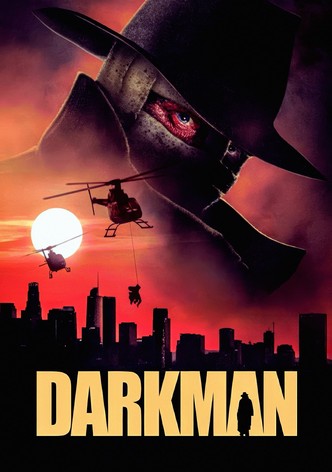

It’s true: somewhere in between making Excalibur, Schindler’s List and Husbands and Wives, Liam Neeson made a horror/noir/superhero movie with Sam Raimi called Darkman. If you haven’t seen it, the story focuses on a doctor who survives an assault and then uses his research in synthetic skin to reconstruct his face before seeking out revenge on those who wronged him.
Raimi had originally planned to adapt The Shadow but ended up blending elements of that character with a couple of famous tropes from Universal Horror. If you’re open to genre movies with a slightly camp and very comic booky approach (like Burton’s Batman, though not as good), you might really appreciate it.


If you consider that there are two trilogies in Raimi’s 16 feature films as director to date, it’s remarkable that he’s been able to experiment with so many different genres in that time. His 1999 sports movie, For the Love of the Game, probably did a better job with the “Game” part than the “Love” part, but A Simple Plan, released the year before, was a relatively successful exercise in neo-noir.
Starring Billy-Bob Thornton, Bill Paxton and Brigette Fonda, the story centres on four friends who discover a bag of money and their subsequent attempts to hide it—at first from the authorities but eventually from each other, too. If you’re a fan of movies like Blood Simple or Shallow Grave, this one will be right up your alley.



Before tackling the sports movie and the neo-noir, Raimi set his sights on the Western genre with 1995’s wildly entertaining The Quick and the Dead. It’s especially notable for featuring a young Leonardo DiCaprio, a year or so on from earning an Oscar nomination for What’s Eating Gilbert Grape, but before going into the Hollywood stratosphere with Romeo + Juliet and Titanic.
Despite Leo’s presence alongside Sharon Stone and Gene Hackman, the duelling gunslinger movie proved to be a disappointment both financially and with critics at the time, but it’s aged very well. For better or worse, we probably have to thank Joss Whedon, who contributed to the script’s punchy dialogue, for its longevity. So, if you’re a fan of Buffy or Firefly, add it to the watch list.

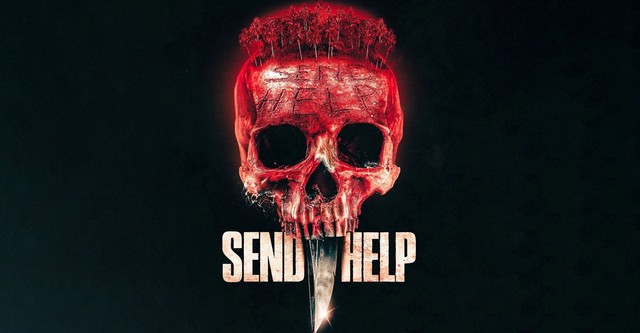

It’s probably helped by recency bias, but Send Help makes the top six for brightening up a particularly chilly month of releases at the multiplex. The plot follows the newly appointed CEO of a powerful company who denies his employee a promotion that was promised to her by his father before he stepped down. This volatile situation is exacerbated when the plane taking them to Bangkok crash-lands on a desert island, meaning that they’ll have to work together (or not) to survive.
The movie was written by Mark Swift and Damian Shannon, whose previous credits include Shark Tale and the 2009 reboot of Friday the 13th—so don’t go in expecting Citizen Kane. What you can expect are plenty of Raimi’s signature horror flourishes and two game performances from McAdams (always a delight) and O’Brien (an actor who is quickly becoming one of Hollywood’s best go-to ‘assholes’).
Bundle 4k


After two decades of superhero movie dominance, it’s hard to imagine a time when that genre was not all-conquering at the cinema. Burton’s Batman movies had been a false dawn, and the genre wouldn’t really find its footing again until X-Men was released in 2001. Raimi’s first Spider-Man, starring Toby Maguire and Kirsten Dunst, didn’t just bring another fresh jolt of energy to superhero filmmaking; it basically cracked the recipe of humour, action and sentimentality that would later become the blueprint for the MCU.
Raimi’s sequel (more on that in a moment) is naturally better remembered, but this first instalment, which features an iconic performance by Willem Defoe, is still a banger. A movie so influential that, 24 years later, it’s still inspiring memes.






After the mauling he received for Spider-Man 3 (a movie that, I’m sad to say, did not make this list), it’s fair to say that Sam Raimi needed a win. The director didn’t take long to win audiences and critics back over, however, and he did it by returning to the genre that made him famous, delivering one of the best horror movies of the 21st century in the process.
Drag Me to Hell stars Alison Lohman as a loan manager who, in an attempt to placate her boss, denies an elderly Romani woman’s request to extend her mortgage payments. Of course, in a moment of pure B-movie bad taste, the woman puts a curse on her, and we simply grit our teeth and watch as her nightmare unfolds. It’s a delightfully entertaining and nasty film—somewhere in the vein of Hereditary or The First Omen—that leaves you with a terrifying feeling of dread.



Finally, we get to Spider-Man 2, a movie that some people still consider to be the best superhero movie ever made. I’m not here to make that call, but I will say that the sequence on the train still gets me every time. The same goes for Alfred Molina’s incredibly touching performance as Otto Octavius. I’ll never quite understand why Jon Watts didn’t ask him to use his “Peter Park, brilliant but lazy” line in No Way Home.
Whatever about all that, Raimi’s second spidey installment still absolutely rips as a pure action film—the fights between Doc Oc and Spider-Man, especially the one where they’re flinging bags of loot at each other on the side of a skyscraper, are still some of the most kinetic we’ve seen in a superhero movie. If you’re only familiar with the character from the Tom Holland years (as in Homecoming and Endgame), I highly recommend going back to give Raimi’s trilogy a watch.


Given the impact of both movies and given how Sam Raimi effectively rebooted the first Evil Dead when he returned with a bigger budget to make Evil Dead II, I think I’m within my rights to place the two of them in joint first place.
Watching the 1981 original again, a cabin in the woods style creep-out movie, it’s still thrilling to see how inventive the young Raimi was, conjuring tricks with the camera that you can still see traces of in Doctor Strange, a full 40+ years later.


When Raimi returned with Evil Dead II, he brought back Bruce Campbell as Ash but made a few key changes: notably doing away with the infamous tree rape scene and leaning more towards the film’s humorous side, with some scenes even bordering on slapstick.
That Evil Dead II relishes in that absurdity while still staying true to its creepy tone is one of the reasons why Raimi quickly became known as a master of genre, paving the way for everything that’s come since.