What Is the Baldur’s Gate 3 TV Series & What Should You Watch Before?

If you were gaming during the summer of 2023, you wouldn’t have escaped a certain Dungeons & Dragons RPG, featuring, among other characters, a fiery-red Tiefling with a big axe, a sassy, pale Elf with a thirst for blood, and a whining wizard on the verge of magically blowing himself up. Baldur’s Gate 3, the latest in a video game series that began in 1998, went on to sell 20 million copies as of 2025, achieved a record-breaking run of awards success, and spawned a passionate, ship-heaving fanbase.
Combine all that with the ongoing resurgence of D&D since the half-century-old TTRPG (table-top role-playing game) was revamped in 2014, and the tie-in video game is not a hard sell for adaptation material – and that’s exactly what we’re getting: Baldur’s Gate is being made into a TV series by The Last Of Us’ Craig Mazin. The quality of the HBO iteration of that other critically and commercially successful video game series, not to mention the increased quality consistency of game-to-screen media over the last decade (the Sonic films, Super Mario Bros., Fallout, Detective Pikachu and more), is great news for fans of D&D and Baldur’s Gate.
For those who are interested in the project but are less familiar with both those things, here’s what you need to know, and how to get better acquainted with the Forgotten Realms via other existing adaptations and ‘inspired by’ films and shows.
What You Need to Know About Baldur’s Gate 3 Before the TV Series
Excluding spin-offs and expansions, there are three main games in the Baldur’s Gate series. As previously mentioned, they take place in the main setting of D&D, the Forgotten Realms — more specifically, in and around one of the largest cities in the region of the Sword Coast, the titular Baldur’s Gate – and use the character races, classes, lore, and mechanics of D&D for its gameplay.
While the games are sequels to one another, they are only loosely sequential, meaning you can easily pick up the newest one, BG3, without ever having played the previous ones (as I did). Similarly, you don’t ever have to have rolled a single d20 in your life to get to grips with its system, though prior experience and knowledge certainly make the learning curve less steep.
Interestingly, Mazin’s TV series will take place right after the events of BG3, making it even more enticing for players eagerly waiting for the next game instalment. On paper, this implies a higher bar for entry for newcomers. However, I assume that, in the same way the prior two games provide the background for the third one without presuming every player is already au fait with them, the TV continuation will use BG3’s story as a jumping off point to tell an entirely new story.
All you need to know, broadly, about D&D to get to grips with the TV series is that it’s a classic, high fantasy world where you can fight things like dragons and evil wizards, make deals with gods and devils for fantastic power, or just be really good at swinging a sword around. If you’re familiar with The Lord of the Rings, from which D&D takes heavy inspiration, you already know the vibe to expect.
In BG3, you, the player character, wake up aboard a Mind Flayer ship – otherworldly beings with psychic powers and a hankering for world domination – as you’re infected with one of their tadpoles. This process, known as ceremorphosis, should quickly turn you into a Mind Flayer… But strangely, it doesn’t. After escaping, you meet others who’ve also been infected (as well as some who haven’t but have a vested interest in helping you regardless), whom you can recruit as allies. They, too, are somehow holding off the ceremorphosis transformation, and there’s a mysterious figure who visits you all in your dreams, offering advice. Together, you journey to Baldur’s Gate in search of a cure and unravel the mystery of a sinister cult with a link to your affliction, as well as the identity of the mysterious dream figure aiding you. Whether you choose a heroic or more villainous path, the game concludes with a spectacular battle for control of godlike powers, leaving much of the titular city reduced to rubble by the end.
What happens thereafter in the epilogue depends on the choices you’ve made along the way, meaning there is no definitive ending for BG3 – as is the nature of RPGs. Game studio Larian have confirmed it’ll have no involvement in the TV show, though it is still supportive of it. This gives Mazin a lot of creative license in essentially creating the original sequel to the game that fans desperately want, and won’t get from Larian, as the studio is done with Baldur’s Gate entirely.
The show could take place in the immediate aftermath of the climactic assault on the city, where the rebuilding process and potential power vacuums could make for interesting storytelling opportunities. Fans will doubtless be eager for the party characters – Shadowheart, Laezel, Gale, Astarion, Wyll, Halsin, Jahiera, Minsc, and optional ‘evil’ recruit, Minthara – to make appearances. But I suspect they’ll be relegated to cameos in favour of an original cast picking up the reins.
D&D Films & Shows to Watch Before the Baldur’s Gate 3 Adaptation
There are scant ‘proper’ adaptations of D&D available, and only two that I’d truly recommend you watch. The 1980s animated series is considered a nostalgic classic for a certain generation, though it may be a bit hokey if you don’t fall into that demographic. The 2000 movie, which features a villain in blue lipstick and a Wayans brother character called Snails, is firmly on my ‘so bad it’s good’ list, but barely resembles the IP it bears the name of.
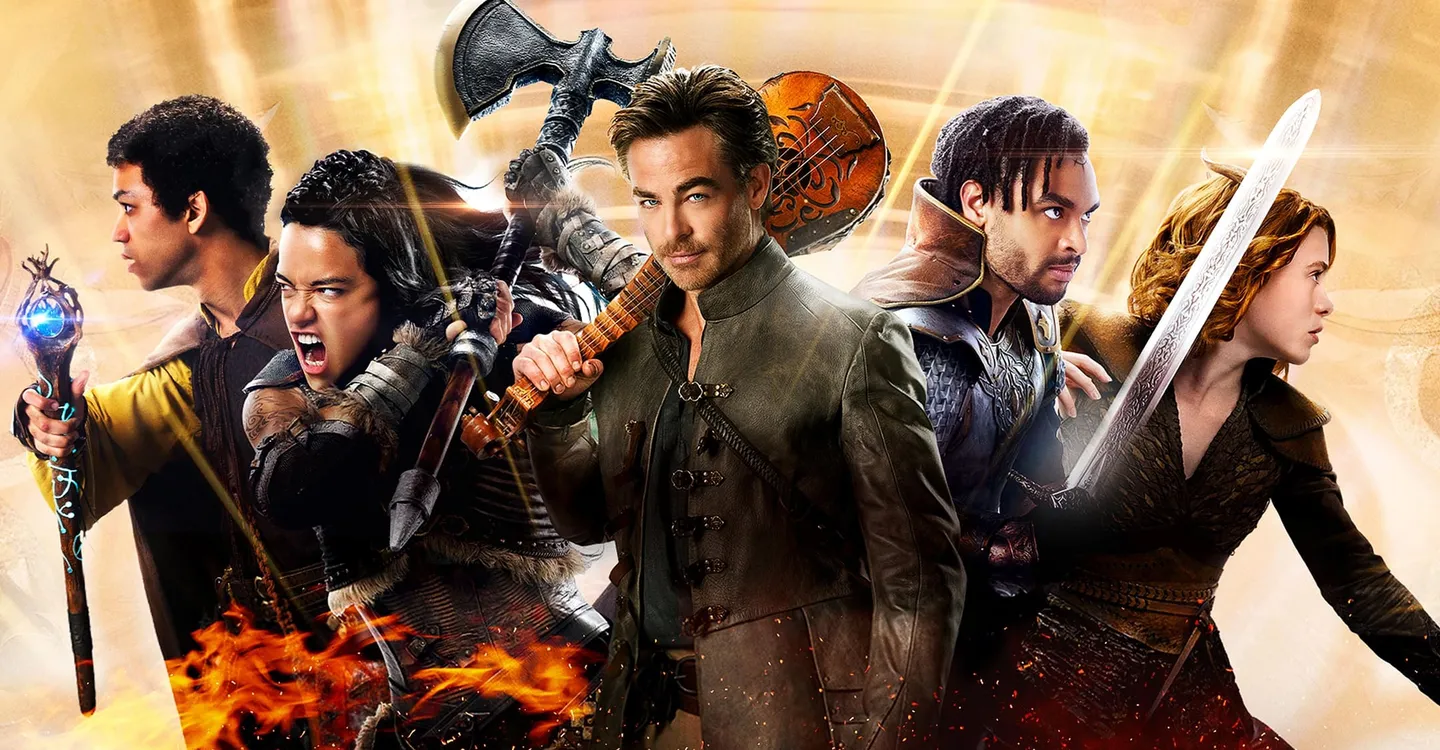
Instead, one of your best options for official D&D media is easily the 2023 film, Honour Amongst Thieves. It stars Chris Pratt and Michelle Rodriguez as an unlikely duo of rogueish antiheroes, who assemble more misfit adventurers to their cause when they’re betrayed by Hugh Grant’s delightfully slippery villain. It’s everything you could want from a fantasy, action-adventure romp, and as a seasoned D&D player, I highly endorse it as a whistle-stop tour of what life is like in the Forgotten Realms, as well as a decent overview of how things like spellcasting works for different classes. The only thing more criminal than Grant’s wheeling and dealing is the fact that it somehow hasn’t gotten a sequel in a movie landscape saturated with unnecessary ones.
Alternatively, if you want a quicker fix, I also recommend the first episode of the animated video game adaptation anthology, Secret Level. The episode is a brief but blisteringly action-packed, stunningly animated dip into an epic D&D battle, wherein a party come face-to-face with one of the game’s legendary Big Bads, the Dragon Goddess Tiamat.
In terms of D&D-related media, you can’t go wrong with the animated series, Vox Machina and its sequel, Mighty Nein. They’re both based on the first two campaigns of actual play (playing a game in real-time) legends, Critical Role, and even with the dice-rolling and improvised chaos absent from the screen, the shows are incredibly entertaining, streamlined versions of real campaigns set in original worlds that are based on D&D’s play system, character races and classes. For anime nerds, the same can be said of Record of Lodoss War, a lovely little slice of early ‘90s, old-school fantasy anime, based on creator Ryo Mizuno’s original TTRPG, Forcelia, which was essentially D&D homebrew (user-customised content). Fans of Ghibli’s maligned Tales From Earthsea will be on its wavelength.
Speaking of actual play, if you don’t feel you have the time to spare for three to four hours of every episode of Critical Role, which are all available for free via YouTube, Dimension 20 is a more comedic, compact watch, and there’s lots of crossover between the two casts. D20 is also available on YouTube, though you’ll need a paid subscription to Dropout to watch. If you’re curious about how a real game is played, these are two of the most popular options – and for good reason: the players are a mixture of professional voice actors and comedians, making the role play riveting, but they also have enviable chemistry as real-life nerdy friends who simply love the game. You’ll wish you were around the table, rolling dice with them, even if you know you’d be improvised right under said table.