11 Films That Prove 1975 Was The Most Radical Year In Cinema

In all the years I’ve written about movies, I’ve never felt shortchanged when writing a top ten at the end of a calendar year. That said, not all times are created equally, and in the history of the cinema, some years do justifiably stand out.
Film scholars tend to point to 1939, a 12-month period when moviegoers could have bought tickets to first-run screenings of Mr Smith Goes to Washington, The Rules of the Game, Stagecoach, Dark Victory, Only Angels Have Wings, Gone With the Wind, The Wizard of Oz and, best of all, Ninotchka. Not bad at all.
In 2024, we were reminded of how great it must have been to be a movie lover in 1999—a year when films like The Matrix, Beau Travail, The Sixth Sense, Fight Club, The Blair Witch Project, The Talented Mr. Ripley, Office Space, Cruel Intentions, 10 Things I Hate About You, Eyes Wide Shut, and Notting Hill, amongst many others, all lost out on Best Picture to American Beauty.
But enough of that digressing. 2025 saw the 50th anniversary of what some consider the most radical year in cinema—and even if you don’t agree with that, it was certainly one of the most consequential. Off-screen, George Lucas formed Industrial Light and Magic to help with constructing A New Hope; with Sneak Preview, Gene Siskel and Roger Ebert went on air together for the first time; and Pier Paolo Pasolini (more on him later) was murdered in Rome. There were also, of course, some incredible things—which I’ve listed below in no particular order—happening on-screen. Read on to discover more and use the guide below to find them on AppleTV, Netflix, Prime Video and elsewhere.


I think the best way to think about 1975 is as a year when things began, and other things started to end—a passing of the baton, let’s say, or at least a readjustment of how Hollywood operated going forward. No film had more to do with this shift than Jaws, which famously invented the summer blockbuster while reminding the studios—who’d just spent the last five years letting the lunatics run the asylum—what was most important to them: aka, the bottom line.
Whether you see that as a gift or not, nobody would argue that Jaws is anything less than a masterpiece—a perfect film about an island, a shark and a boat that wasn’t big enough, which announced Steven Spielberg as the greatest storyteller of his generation. If you’re a fan of E.T. or Close Encounters, you probably don’t need reminding!







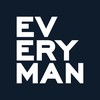


Speaking of letting the lunatics run the asylum: even as Jaws laid waste to box office records around the globe, a few masterpieces of the New Hollywood era were still floating around. The best of these was Milos Foreman’s One Flew Over the Cuckoo’s Nest, a masterclass in acting, filmmaking and satire that justifiably became one of only three films in history to win the “big five” at the Academy Awards.
The film stars Jack Nicholson as a convicted criminal who decides to try and shorten his sentence by cosplaying as a psychotically unstable person. The movie sees Nicholson become the head of a merry band of inmates in the psych ward of Oregon State Hospital, all under the watchful gaze of his nemesis, Nurse Ratched. If you like Jack at his most playfully unhinged (somewhere between the Jack of Five Easy Pieces and the Jack of The Shining), you’re gonna love it.


Another New Hollywood classic that was released that year was Sidney Lumet’s Dog Day Afternoon, a film that only seems to grow more and more influential as the years go by—just look at the work of the Safdie Brothers (Good Time and Uncut Gems especially) after watching it and you’ll know what I’m talking about.
And while we’re on the topic of radicalism, few films captured the countercultural energy of the era quite like it. The story follows a bank robber who needs the money to help his partner transition, as it was not quite called at the time. That Lumet chose to approach that topic with basic empathy shows just how much the film was ahead of its time. Now, altogether, Attica!


The third New Hollywood classic from our rundown of 1975 is Robert Altman’s Nashville — the one that most people seem to agree is the director’s best. Taking place over the course of a few days, Nashville, as the name might suggest, offers a panoramic portrait of the city’s thriving Country music scene through the slightly less melodious lives of some of its inhabitants.
With his wildly successful debut, M*A*S*H, Altman had basically reinvented the ensemble film, using overlapping dialogue in scenes that seemed to be viewed from afar—a style that proved incredibly influential, not least on Paul Thomas Anderson (think Boogie Nights and Magnolia).

And while we’re on the subject of melodies, 1975 was also a landmark year for musicals, and specifically the rock opera: a now dormant and much derided subgenre that perhaps is due a revival. This is the year when The Who released the druggy (and pretty batshit) Tommy, a film (directed by the transgressive British filmmaker Ken Russell) that took their song Pinball Wizard as an elevator pitch.
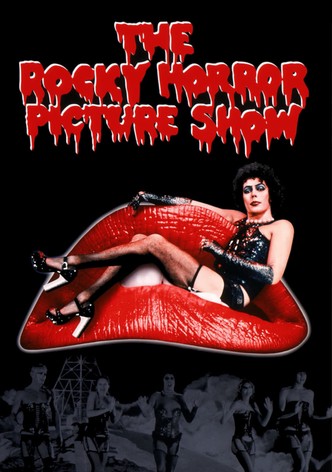
Even better, and also more enduring, was The Rocky Horror Picture Show, a film that still plays in my local cinema at least once a year. Indeed, 50 years on, it’s still remarkably fun and sexy, with wonderful performances from Tim Curry and Susan Sarandon and no shortage of great tunes. If you like your musicals camp (think Grease) and a little raunchy, you’ll love it.




Bundle HD



Another genre on a steady rise in the mid-70s was the documentary—this was thanks largely to the rise of what was called “vérité” filmmaking as well as the growing affordability of portable cameras. In 1970s America, the Maysles brothers were at the heart of that movement, and Grey Gardens remains their most influential work. It’s probably my favourite, too.
The film is a portrait of a mother and daughter (both relatives of the Kennedys) living together in a decaying mansion in a way that feels like Sunset Boulevard but also still weirdly relatable, even aspirational. It’s no accident that it’s still being endearingly memed 50 years on.


Another fan favourite subgenre that started to grow in 1975 was the battle royale. Television was only two decades old at this point, but filmmakers had already started to wonder where all that hunger for content might eventually lead. Norman Jewison’s Rollerball imagined a future world where corporations ruled, and the most watched show is a gladiatorial sport where people really die.
At the same time, Roger Corman’s breeding ground studio, New World Pictures, was releasing Death Race 2000, a landmark early example of a genre that would inspire everything from The Running Man to Battle Royale. The movie, which features a deadly race across the USA, introduced no less than Sylvester Stallone to the world and was also the first job of sound designer Ben Burtt. Is it too much to suggest that without this movie, lightsabers wouldn’t hum in quite the same way? It’s possible.








Outside of the states, there were also plenty of exciting things happening. In the UK, the Pythons released The Holy Grail, one of the best comedies of all time, while Stanley Kubrick made Barry Lyndon, a movie that more and more people seem to be coming to realise is his greatest masterpiece.
The film, which was largely shot in Ireland, follows the titular hero from poverty to riches and back again in one of the darkest and most darkly hilarious stories of hubris ever told. Determined to recreate the look and feel of the era, Kubrick painstakingly shot entire scenes with only candlelight. The resulting film is not only one of his funniest (and if you enjoy Dr Strangelove, make sure to check it out) but really one of the most ravishing productions of all time.



While all those aforementioned masters were out delivering some of their best work in 1975, a few future auteurs were just getting started. In Australia, Peter Weir (who went on to make The Truman Show, Dead Poets Society and Master and Commander) released his haunting breakout film, Picnic at Hanging Rock. Meanwhile, in Canada, the young David Cronenberg released his debut feature, Shivers, thus starting an astonishingly consistent, and consistently astonishing, 50 years (and counting) behind the camera.
Fifty years on, the film, which has all the psycho-sexual, body-horror elements that fans of the director would come to love, is still a visceral thrill—especially for anyone who’s appreciated more recent, clearly Cronenberg-inspired films, like The Substance or Titane.




If we look even further away from Hollywood, aesthetically and geographically, Andrey Tarkovsky released his classic film Mirror, while, in Belgium, Chantal Akerman released Jeanne Dielman, 23 quai du Commerce, 1080 Bruxelles—a film that was recently voted (in a very reputable poll) the greatest of all time.
Whatever the case, Akerman’s observational masterpiece has been a pillar of European cinema for decades now, and if you’re a viewer with a taste for the austere—think films like The Piano Teacher—this could be one for you.